Australia
Australia harbors approximately 60 native palm species, the vast majority confined to the wet tropics of Queensland in the country's far northeast. This concentration — more than 20 native palm species within the Daintree and Wet Tropics rainforest region alone — reflects the ancient geological history of the continent, which has preserved an isolated subtropical and tropical flora unlike anything found elsewhere. Queensland's rainforests are among the oldest continuously forested areas on Earth, and the palms that grow in them are shaped by that deep time.
Australia's palms range from the towering Bangalow, a fast-growing feather palm widespread in coastal New South Wales and Queensland, to the Foxtail Palm, endemic to a tiny sliver of Cape York that was unknown to science until 1978. The Australian Cabbage Palm (Livistona australis) is one of the world's most cold-tolerant Livistona species, growing as far south as Victoria — evidence that Australian palms have evolved to handle a wider climate envelope than most tropical relatives.
Our Australian collection at Paradise Palms highlights this diversity: three species that span Queensland rainforest ecology, subtropical coastlines, and one of the most unusual discoveries in modern botany.
Smugglers
After the Foxtail Palm was formally described in 1983, collectors smuggled seeds and specimens out of Australia so aggressively that Australia restricted its export. Within 20 years, it had naturalized in botanical gardens and private collections worldwide — one of the fastest dispersals of a newly described palm species in history.
A Two-Century Tree
Individual specimens of the Australian Cabbage Palm (Livistona australis) in southern Victoria have been estimated at 200+ years old — making them among the longest-lived palm specimens on the continent.
Edge of the World
The Australian Cabbage Palm grows as far south as Victoria — further from the tropics than almost any other Livistona species in the world. Its cold tolerance is a product of Australia's unique climatic history.
Palms of This Region
Australia's palms occupy a remarkable ecological range. The Queensland Fan Palm (Licuala ramsayi) — not in our collection but closely related to our Licuala grandis — forms dense colonies in the Wet Tropics understory, growing up to 20 meters tall in filtered rainforest light and providing critical habitat for the rare Buff-breasted Paradise Kingfisher. The Foxtail Palm (Wodyetia bifurcata), discovered in 1978 in a single remote valley on Cape York Peninsula, was smuggled so aggressively by collectors in the years following its discovery that the Australian government had to restrict its export. Within two decades it had spread to botanical collections and gardens worldwide. It is a story of both the global appetite for rare palms and the fragility of endemic species when their location becomes known.
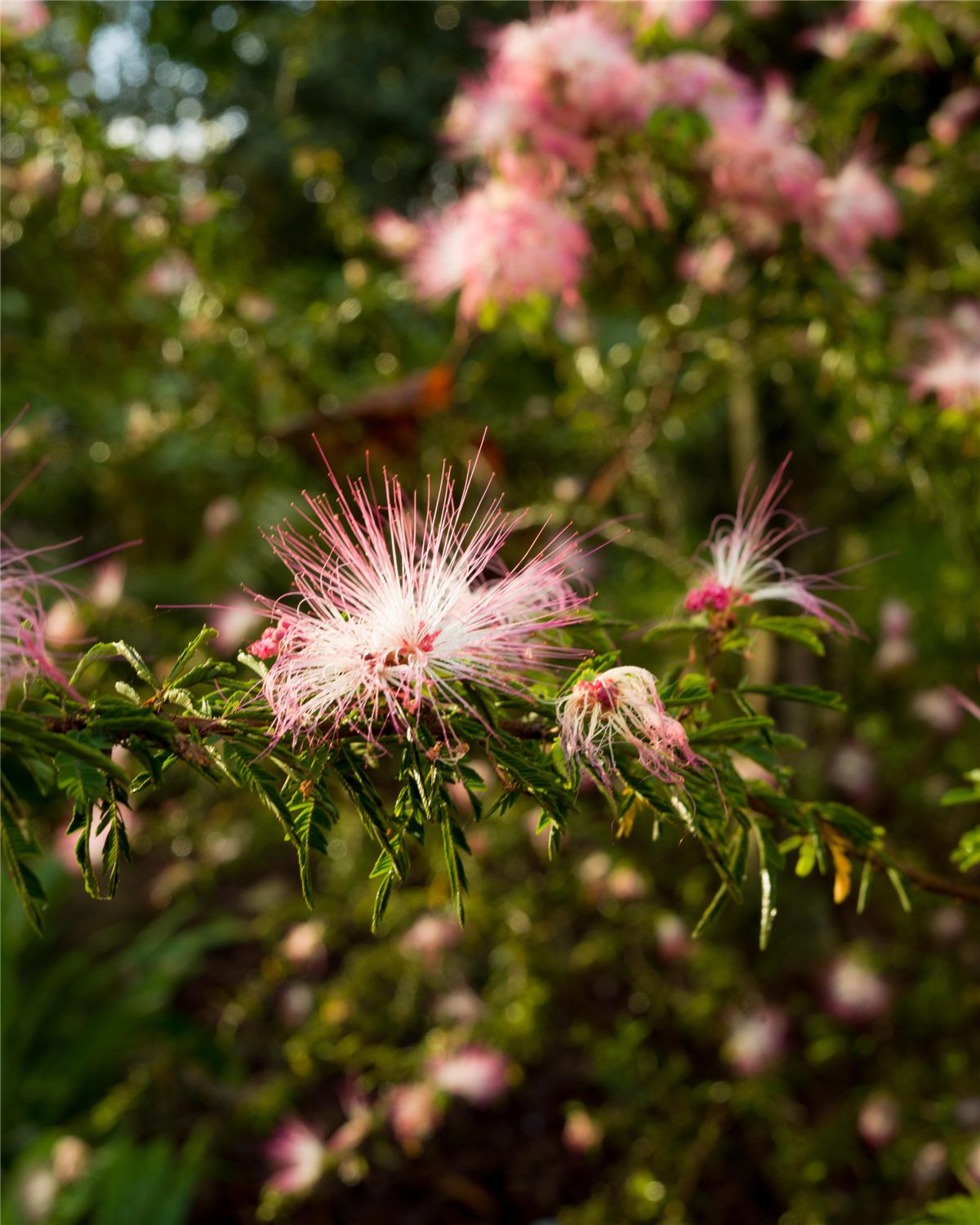
Foxtail Palm
The Foxtail Palm has one of the most unusual origin stories in modern botany. It was formally described to science in 1978 when an Aboriginal man named Wodyeti (the species' genus is named in his honor) showed researchers a remote population in Queensland's Cape York Peninsula. The palm's extraordinarily lush, arching fronds — each leaflet arranged around the rachis like bristles on a bottle brush — made it immediately attractive to collectors. Within years, seeds were being smuggled out of Australia in hollowed-out books and hidden in luggage. Australia eventually restricted collection and export. Today it is grown worldwide and is one of the most recognizable landscape palms in subtropical regions.
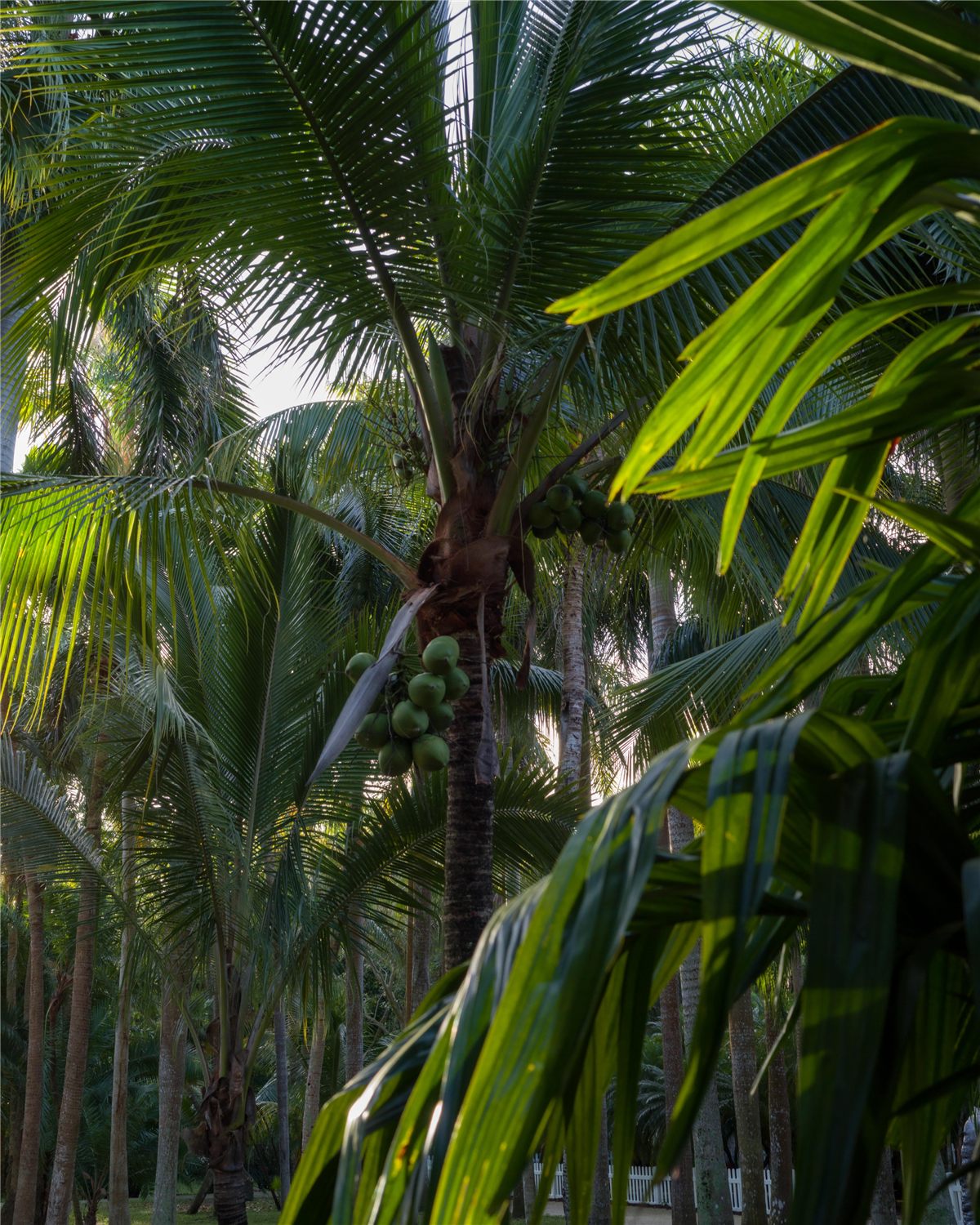
Bangalow Palm
The Bangalow Palm is the palm of Australia's subtropical coast — lining creek banks, rainforest edges, and suburban gardens from southern Queensland to northern New South Wales. It grows quickly, reaches impressive heights, and is notable for its neat, ringed trunk topped by a bright green crownshaft. Its lavender flowers — produced in dramatic hanging clusters beneath the crownshaft — are followed by bright red fruits that attract an enormous variety of birds. In its native riparian habitat, the Bangalow is a keystone species, stabilizing stream banks and feeding the food web.
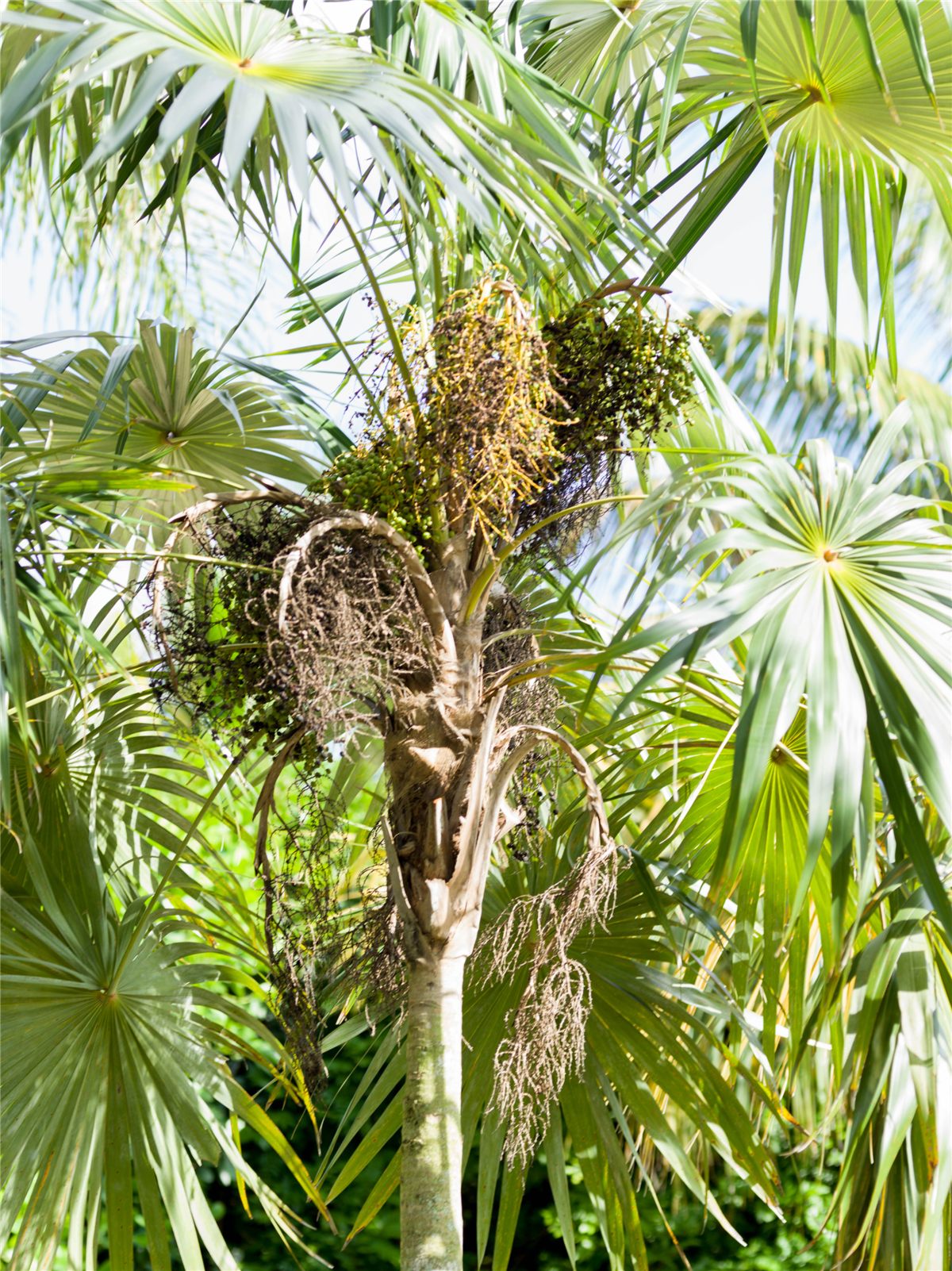
Australian Cabbage Palm
Australia's most southerly native palm is a study in quiet endurance. Growing in the sheltered gullies and coastal escarpments of eastern Australia, often in pure stands of extraordinary density, the Australian Cabbage Palm tolerates temperatures, drought cycles, and conditions that would stress most tropical palms. Its deeply divided, glossy green fan leaves and pendulous leaf tips give it an elegant, weeping quality. Some large specimens near the southern end of its range are estimated at 200 years old — survivors of conditions that have shifted dramatically over their lifetimes.