Africa & Madagascar
Africa is the world's second-largest continent, stretching from the Mediterranean coast to the Cape of Good Hope — but it is the island of Madagascar, floating 250 miles off its eastern shore, that holds the most extraordinary concentration of palm life on Earth. Madagascar is home to 208 indigenous palm species, more than 98% of which grow nowhere else in the world. That single island contains more than three times the palm species of the entire African continent combined.
The African mainland contributes its own distinctive cast of characters: the branching Doum Palm, sacred to ancient Egypt; the graceful Senegal Date Palm clustered along riverbanks across sub-Saharan Africa; and the Blue Latan Palm of Mauritius, now critically endangered in the wild. Across this region, palms have provided food, fiber, building materials, and cultural meaning for thousands of years.
At Paradise Palms, our Africa & Madagascar collection is among the most conservation-significant in our garden. Several specimens represent species whose wild populations are severely reduced — making their presence here not just educational, but important.
The Island of Palms
Madagascar contains more palm species than the entire African continent combined — and 98% of them grow nowhere else on Earth.
Found in Pharaoh's Tombs
The Doum Palm's gingerbread fruit has been discovered in ancient Egyptian burial sites. It was considered a funerary offering for the afterlife.
Racing Toward Extinction
83% of Madagascar's endemic palm species are currently threatened with extinction. That's four times the global average for plant species.
Palms of This Region
Africa and Madagascar produce some of the most visually dramatic palms in cultivation. The Bismarck Palm (Bismarckia nobilis) is perhaps the most instantly recognizable — its enormous silver-blue fans can stop a visitor mid-step. The Triangle Palm (Dypsis decaryi) grows its fronds in three distinct vertical planes, a structural oddity that has captivated botanists and gardeners alike. The Majesty Palm (Ravenea rivularis) lines the riverbanks of Madagascar's lowlands in graceful arching rows, though its wild habitat is shrinking rapidly. What makes this region exceptional is not just the beauty of its palms but their precarity: 83% of Madagascar's endemic palm species are currently threatened with extinction — a rate that dwarfs the global average of 20% for all plant species. The palms you see here may outlast those in the wild.
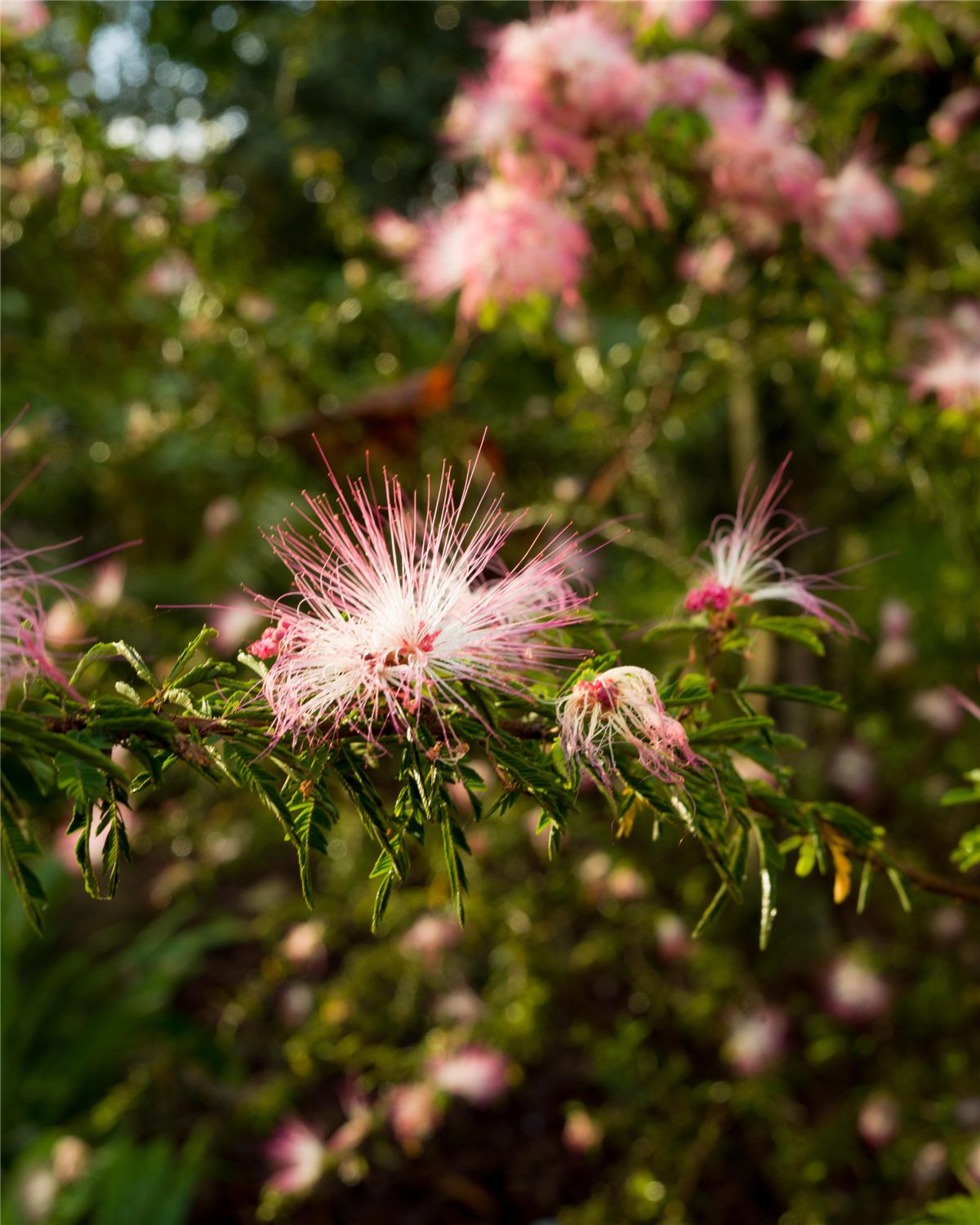
Triangle Palm
Few plants in our entire collection are more immediately arresting than the Triangle Palm. Its bluish-green feather fronds emerge from three distinct ranks, giving the crown — and the trunk — a triangular cross-section that is structurally unique in the palm world. Endangered in the wild, it is found only in a small area of southern Madagascar. Its precise geometry has made it one of the most photographed palms at Paradise Palms.
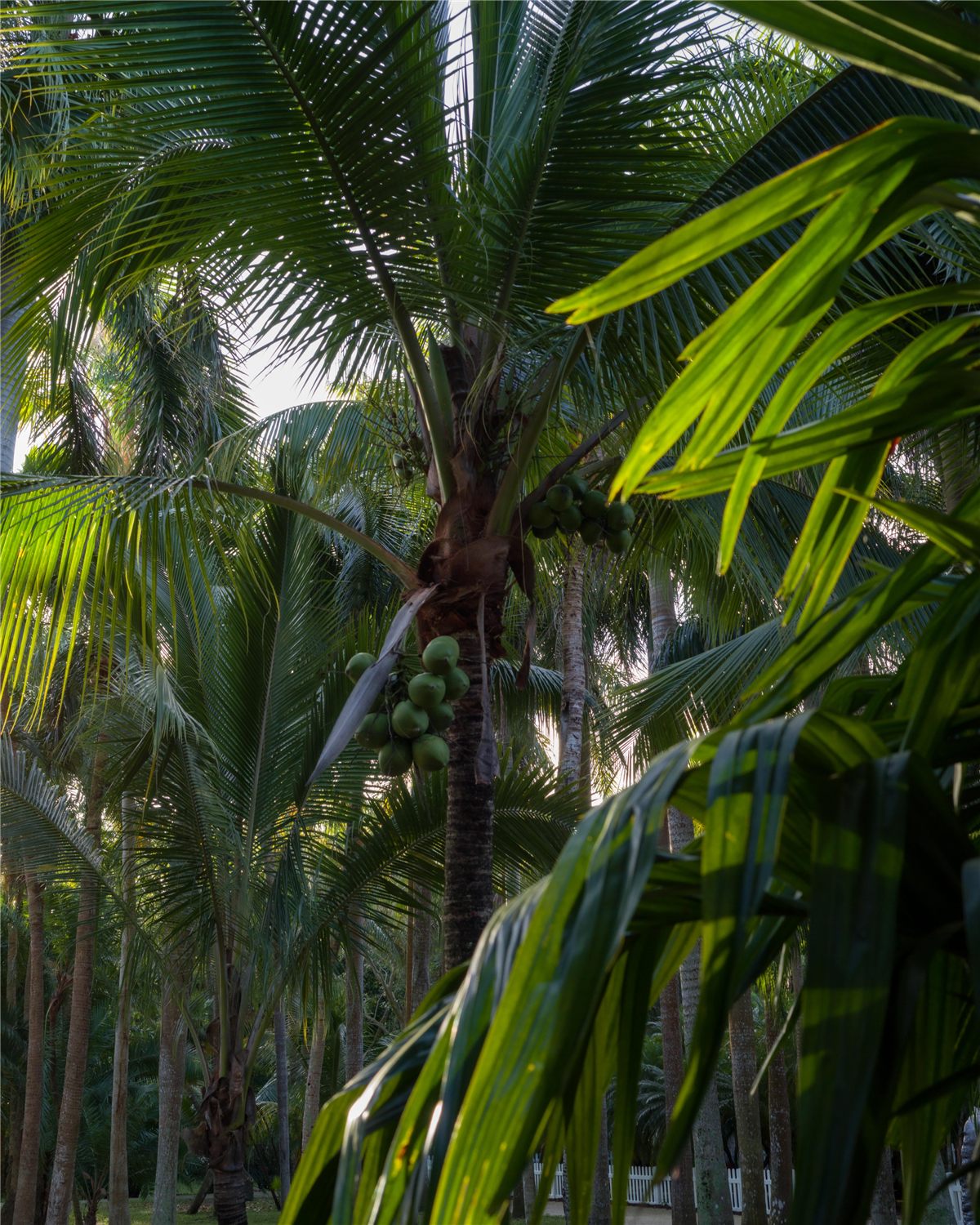
Blue Latan Palm
Native to the island of Mauritius in the Indian Ocean, the Blue Latan Palm produces stunning silvery-blue fan leaves with vivid reddish petioles. It is critically endangered in the wild, with only scattered individuals remaining in Mauritius's degraded coastal habitats. Botanical gardens like ours play a direct role in ensuring this species is not lost entirely. The Latan palms of the Mascarene Islands (Latania spp.) represent three related species, each endemic to a different island.
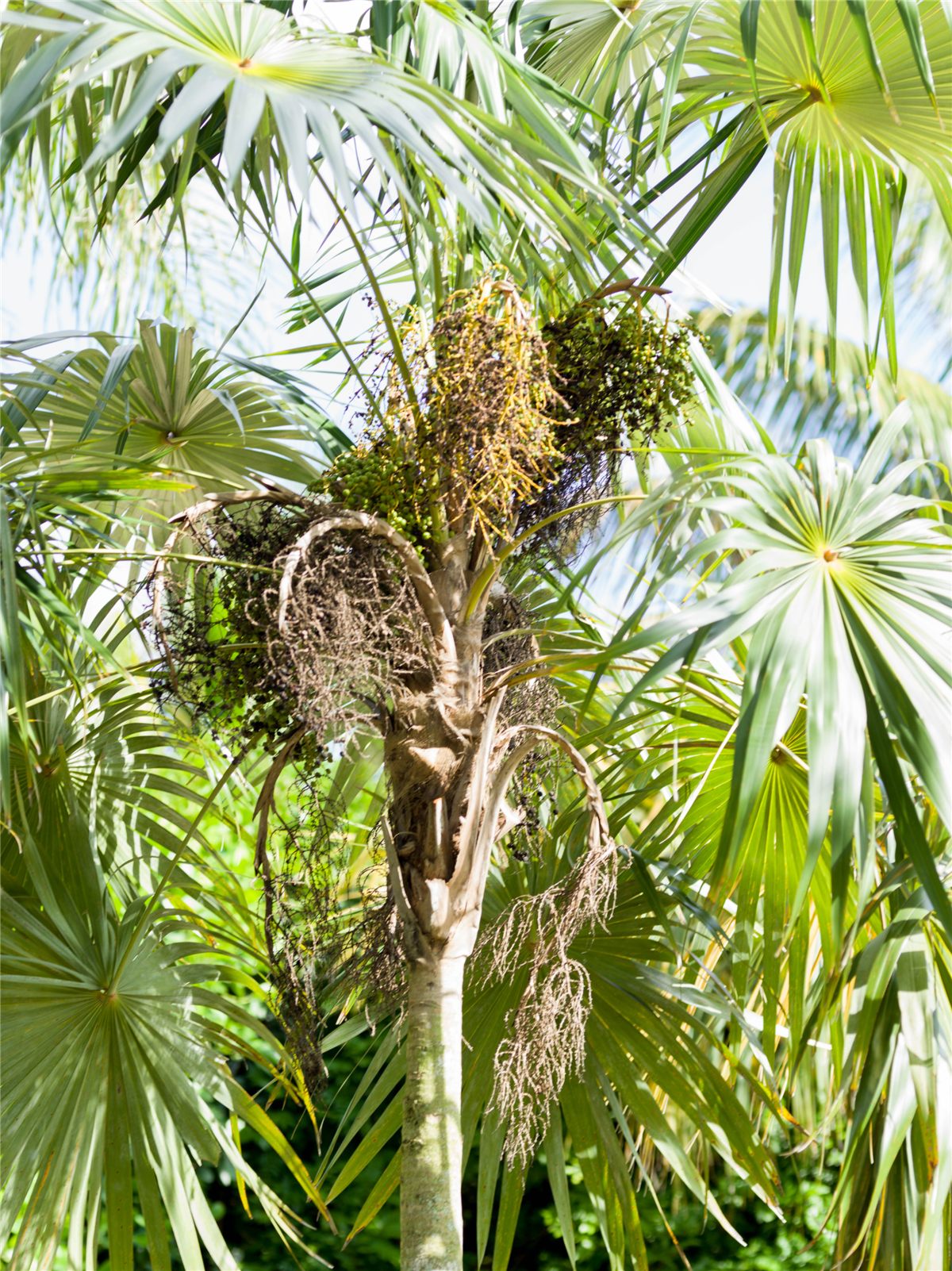
Majesty Palm
The Majesty Palm is perhaps the most famous Madagascar palm in cultivation worldwide — popular as a houseplant, a landscape specimen, and a symbol of tropical elegance. In the wild, it grows along the banks of rivers in southwestern Madagascar, where habitat loss has made it increasingly rare. Our outdoor specimen demonstrates what this species can actually become when given the right conditions: a genuinely majestic tree, not just a parlor plant.