Caribbean & Florida
Florida is palm country. Twelve native palm species call this state home — from the Cabbage Palm dotting cattle pastures and coastal marshes, to the Saw Palmetto sprawling across millions of acres of scrub and flatwoods, to the delicate Florida Thatch Palm clinging to the limestone edges of the Keys. These are not exotic curiosities. They are the ecological backbone of many of Florida's most important habitats, providing fruit for birds and mammals, nesting sites for woodpeckers and owls, and structural complexity in landscapes that without palms would be ecologically diminished.
The wider Caribbean adds further dimension. Cuba's Royal Palm, Jamaica's Bull Thatch, the Buccaneer Palm of the Keys and the island chain extending south — the Caribbean basin is a distinctive palm biogeographic zone, shaped by its island isolation and tropical-to-subtropical climate gradient. Many Caribbean species are found nowhere else on Earth. Several are endangered.
Paradise Palms is located in Delray Beach — at the northern edge of South Florida's tropical zone, where Caribbean species can survive and native Florida species truly thrive. Our Caribbean & Florida collection is the one most immediately connected to the land beneath your feet.
Billion-Dollar Berry
Saw palmetto berries are one of the top-selling herbal supplements in the United States, used widely to support prostate health. Florida's saw palmetto scrub generates significant commercial harvesting — a multi-million-dollar industry.
Palm Pirates
The Buccaneer Palm (Pseudophoenix sargentii) earned its common name from its historical association with remote, uninhabited cays in the Florida Keys and Caribbean — the kind of isolated places that pirates favored. It remains one of the most rarely seen palms in Florida.
Deatheaters
The Cabbage Palm gets its name from its edible terminal bud — the "heart" of the tree, which tastes like mild cabbage. The catch: harvesting it kills the tree. The Seminole people ate it only in times of scarcity.
Palms of This Region
Florida's native palms punch well above their weight ecologically. The Saw Palmetto (Serenoa repens) is the most abundant palm in the United States, covering more than 5 million acres of Florida habitat — and it is a keystone species for dozens of wildlife species, including the Florida Scrub-Jay, Florida Black Bear, gopher tortoise, and the state-threatened gopher frog. Its berries are harvested commercially as a dietary supplement for prostate health, one of the best-selling herbal remedies in the country. The Cabbage Palm (Sabal palmetto), Florida's state tree, produces an edible terminal bud — but harvesting it kills the tree, a fact the Seminole people understood well. Florida's native palms are not just beautiful. They are woven into the state's ecology and its human history.
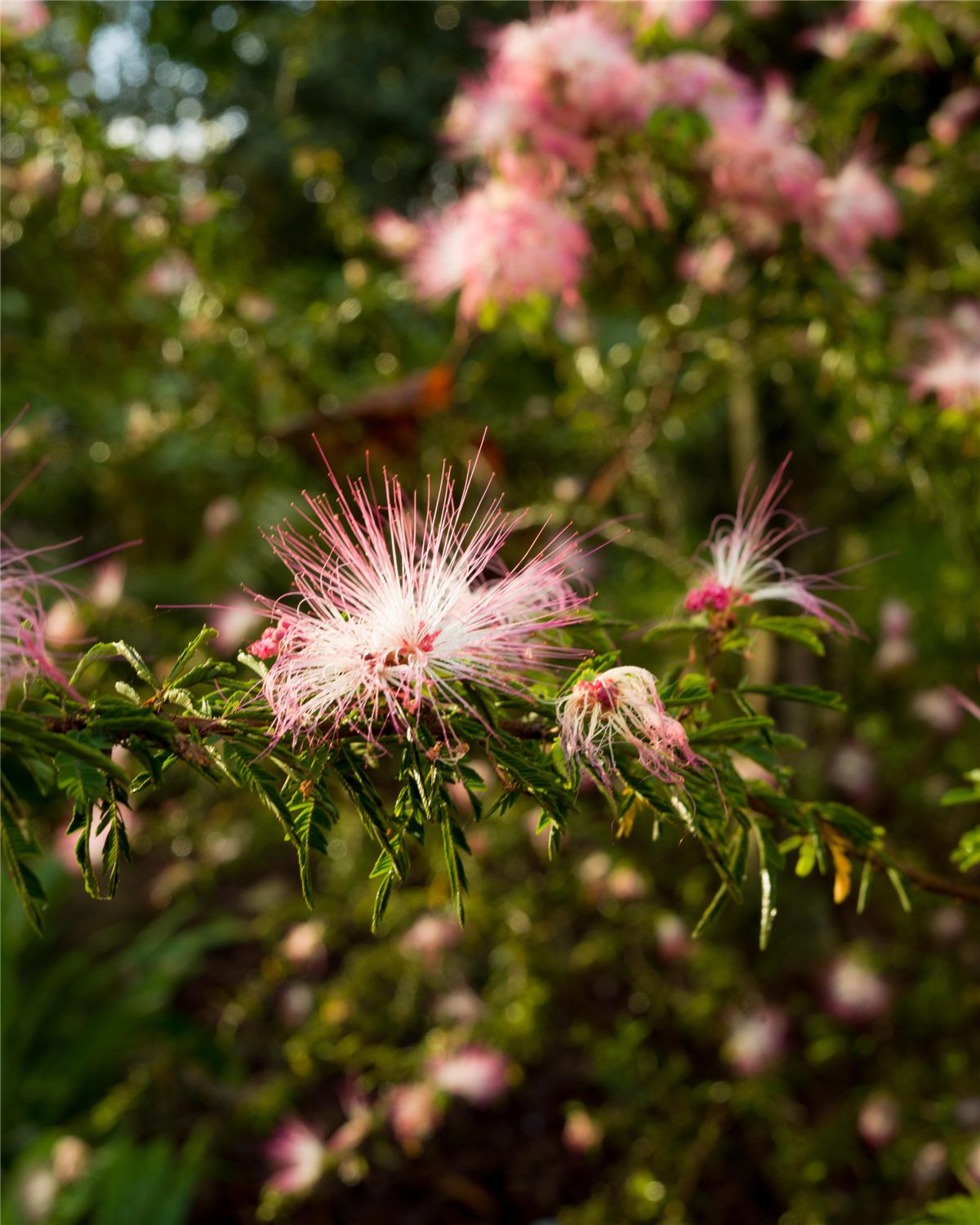
Saw Palmetto
No palm plays a more significant ecological role in Florida than the Saw Palmetto. Covering over 5 million acres of the state's pine flatwoods, scrub, and coastal uplands, it is the dominant ground cover of Florida's most biologically diverse habitats. Its dense, sprawling clumps shelter gopher tortoises, provide nesting cover for ground-nesting birds, and produce heavy berry crops that sustain black bears, raccoons, bobcats, and deer. The plant is effectively immortal by division — some saw palmetto clones are estimated to be thousands of years old. Its berries have been used medicinally by Seminole and other indigenous peoples for generations, and today drive a significant commercial harvesting industry.
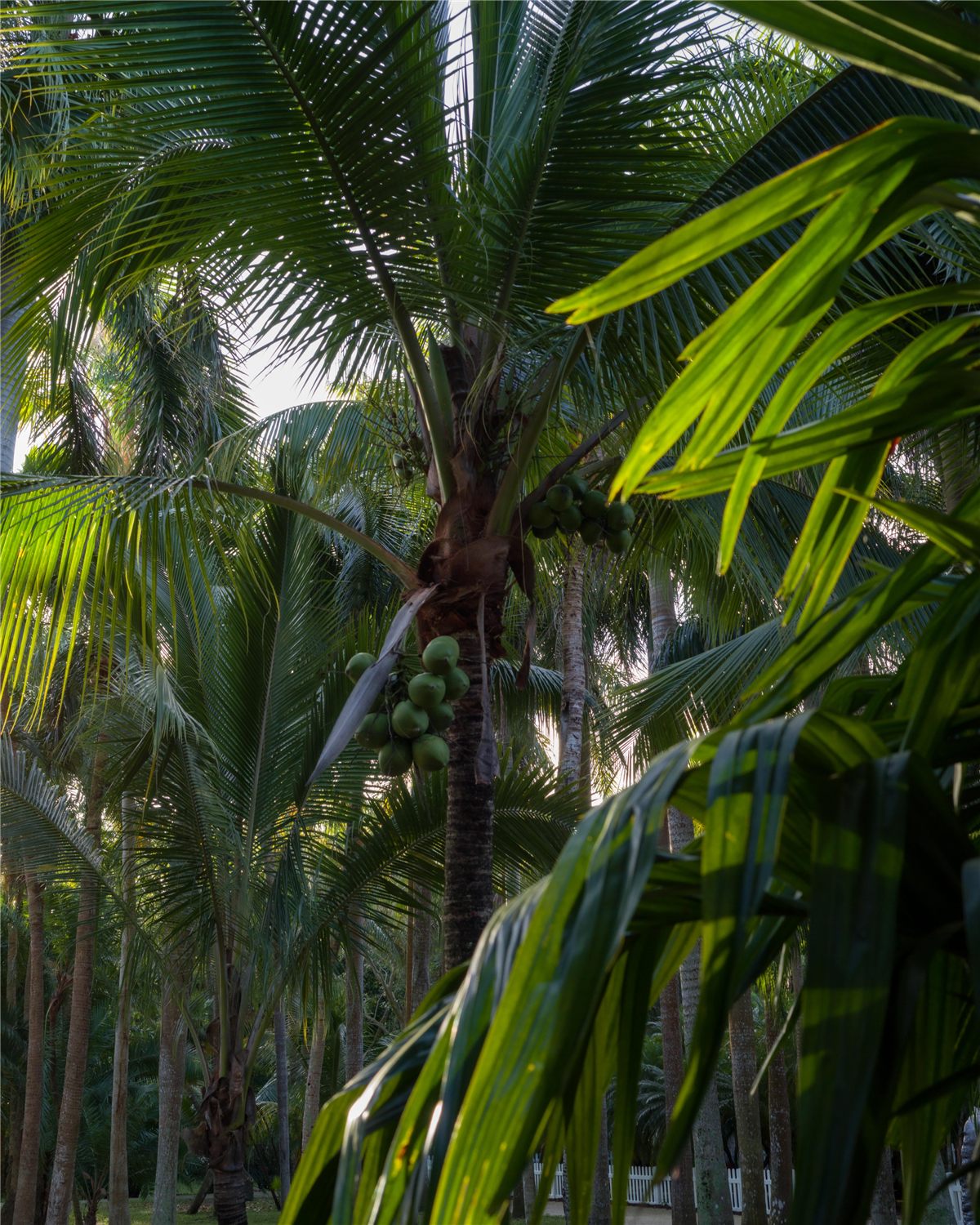
Florida Thatch Palm
The Florida Thatch Palm is one of the most elegant and least appreciated native palms in the state. Growing slowly on the thin, porous limestone soils of the Florida Keys and Caribbean coastlines, it produces delicate, silvery-green fan leaves and small white fruits that feed birds and lizards. It is threatened across its Florida range by habitat loss, storm damage, and sea-level rise. Our specimen was sourced through conservation channels and represents one of the more difficult native palms to establish successfully — a testament to the patience of botanical cultivation.
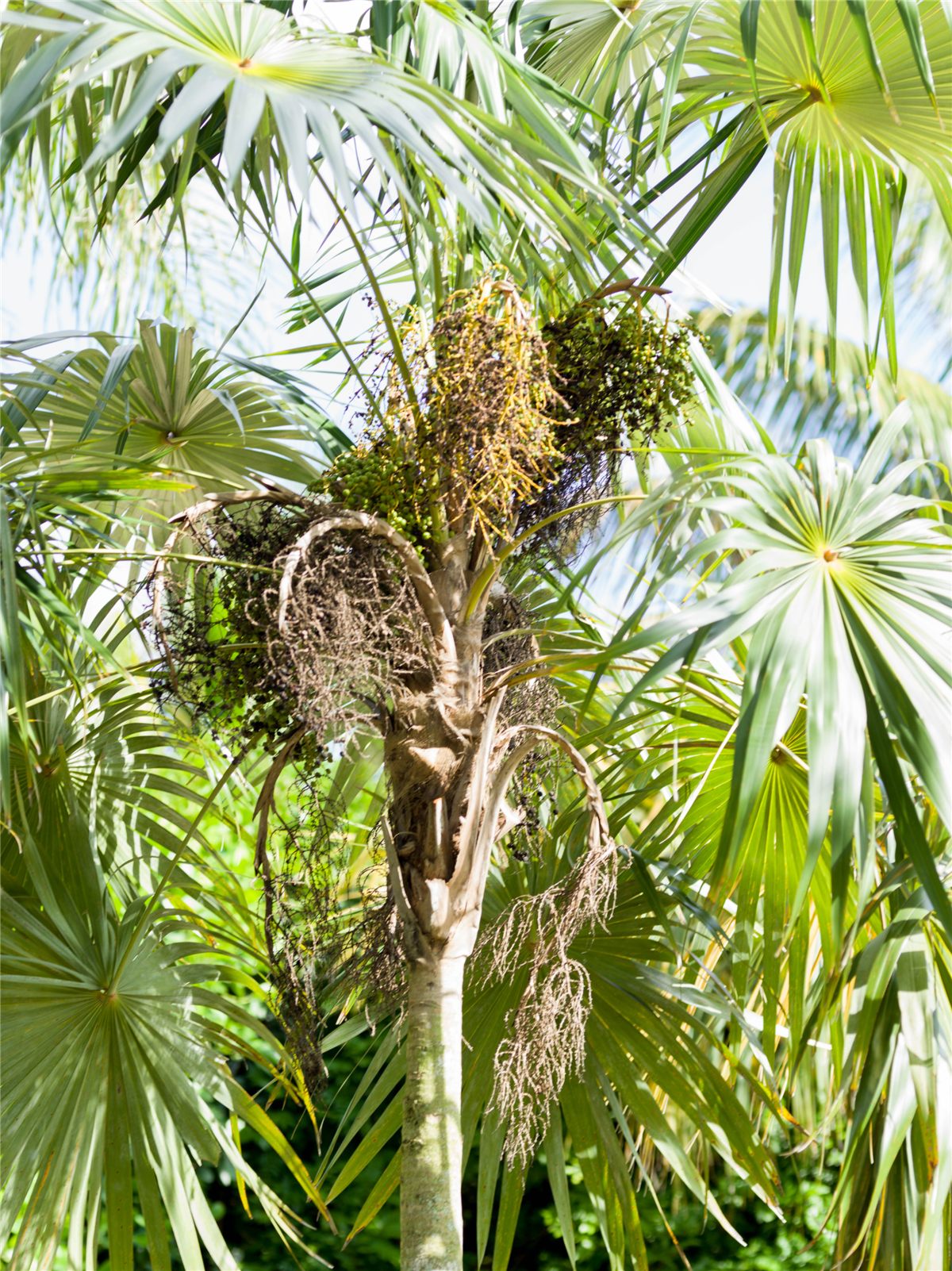
Buccaneer Palm
The Buccaneer Palm is among the rarest palms in the United States. Its wild Florida populations are largely confined to a few rocky cays in the Keys, where it endures salt spray, full sun, and thin limestone soils with remarkable stoicism. It is slow-growing — a mature wild specimen may be a century old — and produces clusters of ornamental red fruits. In the broader Caribbean, it grows on isolated cays and coastal cliffs from the Bahamas to Puerto Rico and the Dominican Republic. Its endangered status and extreme rarity in cultivation make it one of the most significant specimens at Paradise Palms.
Florida Silver Palm
The Silver Palm is a palm of edges and extremes — found on coastal dunes, rocky pinelands, and coral limestone outcrops where few other trees survive. Its fan-shaped leaves are dark green above and silver-white below, creating a distinctive shimmer when wind moves through the canopy. Found in South Florida, the Bahamas, and Hispaniola, it is considered one of the most salt- and drought-tolerant palms in the world. Its small purple fruits are eaten by birds, and its slow growth rate — just a few inches per year — means mature specimens represent decades of survival.