Asia & The Middle East
No region on Earth has developed a deeper, more intricate relationship with palms than Asia. Indonesia alone harbors more than 550 native palm species — making it the single most palm-diverse country in the world. Across Southeast Asia, the Indian subcontinent, and the Middle East, palms have served as food, medicine, currency, building material, and spiritual symbol for millennia. The rattan cane in your chair, the betel nut at a Southeast Asian wedding, the date on a Ramadan table — all come from this region's extraordinary palm heritage.
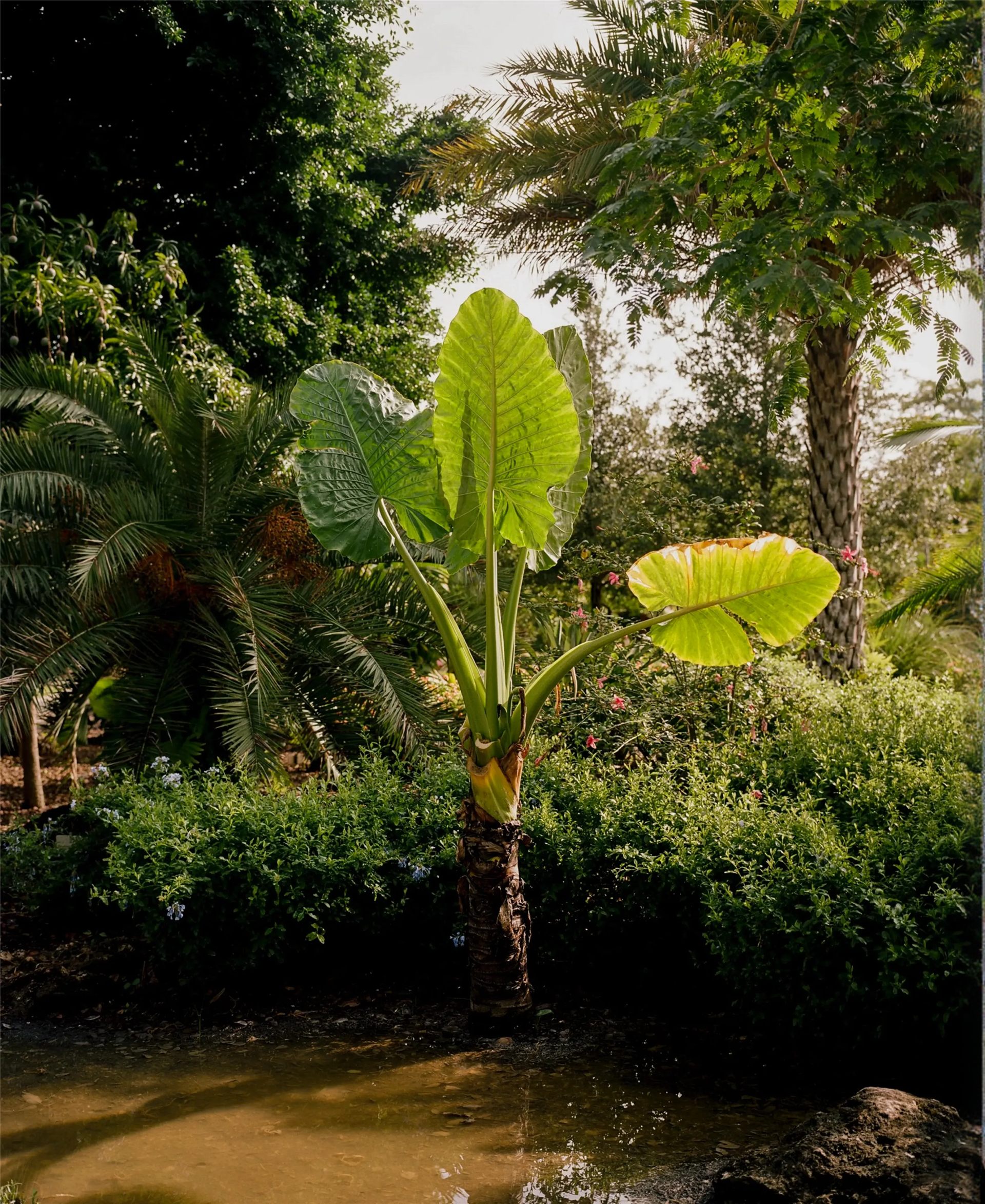
The ecological role of Asian palms is equally significant. Understory palms like the Ruffled Fan Palm and Lady Palm filter light in tropical forest canopies. Giant palms like the Talipot, which can live a century before flowering once and dying, define the skylines of Sri Lankan and Indian forests. The Fishtail Palm's monocarpic stems cycle through the forest understory in shifting waves of growth and die-off.
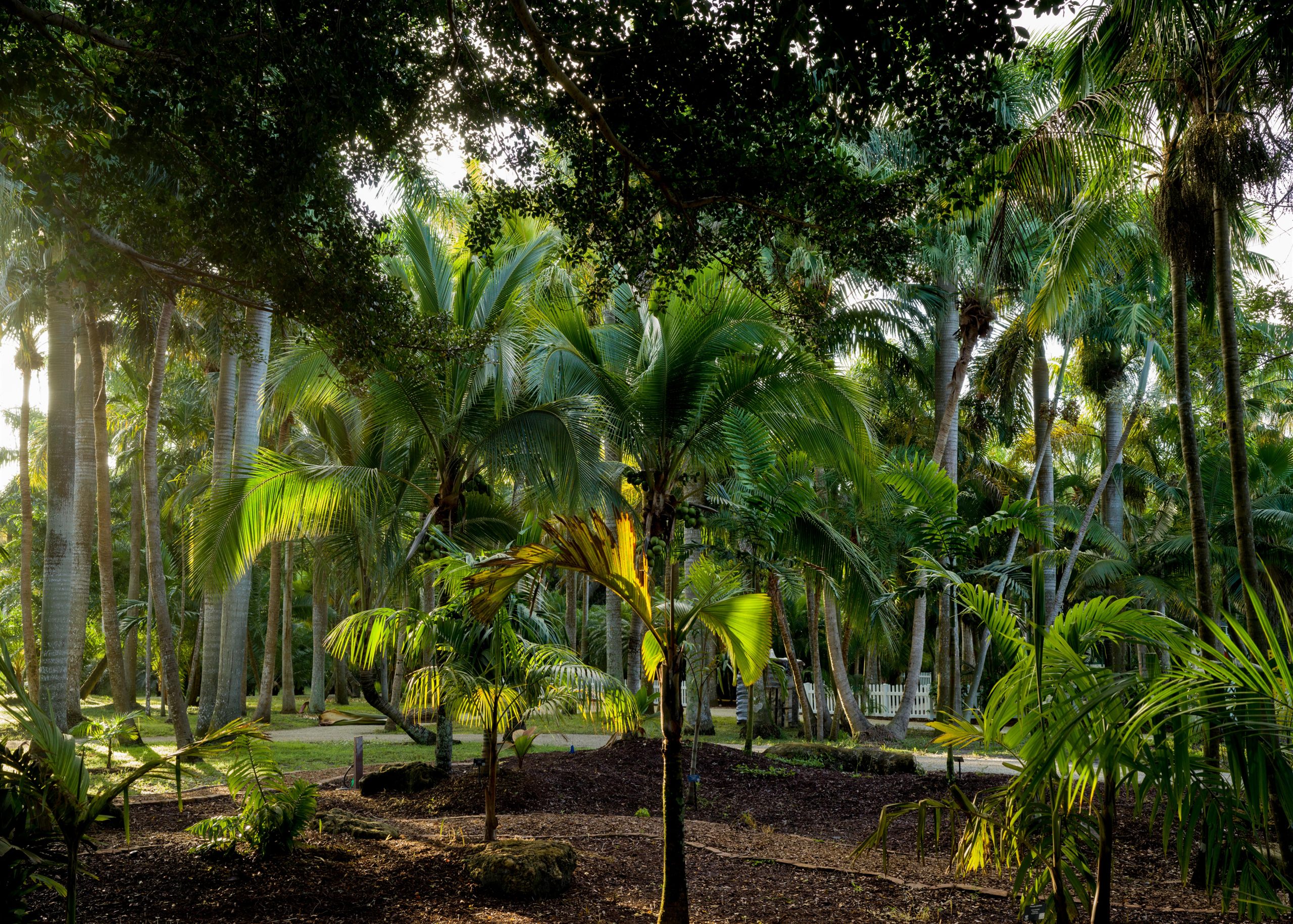
Our Asian collection at Paradise Palms spans Southeast Asia, China, Japan, India, Sri Lanka, and the Middle East — showcasing the cultural breadth and botanical variety of the world's most palm-rich continent.
Stimulating
Betel nut (Areca catechu) is the fourth most commonly consumed psychoactive substance in the world, after tobacco, alcohol, and caffeine. It is used in social, cultural, and religious ceremonies across South and Southeast Asia.
To Die For
The Talipot Palm (Corypha umbraculifera) lives for 30–80 years, growing silently. Then it produces the largest inflorescence of any plant — a branched flower structure up to 8 meters tall with millions of flowers. After setting seed, it dies. There is no second bloom.
550 Species
Indonesia is the most palm-diverse country on Earth, with over 550 native species. Many are still being scientifically described.
Palms of This Region
Asia's palm story is inseparable from human history. The Date Palm (Phoenix dactylifera) has been cultivated in the Middle East for more than 5,000 years — among the oldest continuously grown crops in human history — and sustained entire civilizations in one of the world's most hostile climates. At the other end of the cultural spectrum, the Betel Nut Palm (Areca catechu) remains one of the most widely used psychoactive substances on Earth: an estimated 600 million people across Asia and the Pacific chew betel nut today. Closer to the forest floor, Indonesia's rattan palms have built a global furniture industry that, at its peak, accounted for 80% of the world's rattan supply. Asia's palms don't just grow here — they have shaped economies, rituals, and daily life for thousands of years.
Talipot Palm
The Talipot is a plant defined by patience and a single extraordinary act. For three to eight decades it grows slowly, producing enormous fan leaves — among the largest undivided leaves of any plant — used historically as writing surfaces, umbrellas, and roofing material across South Asia. Then, once in its lifetime, it deploys the most massive inflorescence on Earth: a towering structure up to 8 meters tall carrying millions of cream-colored flowers. Every seed sets. Then the palm dies. Our specimen is a rare treasure — Talipot palms of flowering age are seldom found in cultivation in the southeastern United States.
Ruffled Fan Palm
Native to the island of Vanuatu, the Ruffled Fan Palm produces leaves that appear almost impossible in nature: nearly circular, deeply pleated, with elegantly crimped edges. Most palms have deeply divided leaves; Licuala grandis keeps its leaf nearly whole, resulting in a single shimmering fan that catches and scatters light in the understory. It is one of the most beloved ornamental palms among collectors worldwide — and one of the most rewarding to find thriving in a garden.
Date Palm
The Date Palm shaped human civilization. Originated in the Middle East or North Africa (its exact wild origin is still debated), it was cultivated by the Mesopotamians, revered in ancient Egypt, planted across the Roman Empire, and carried to the Americas by Spanish missionaries. Today it is grown commercially across the Middle East, North Africa, and California. A single mature tree can produce 300 pounds of fruit per year. Our specimen connects visitors to one of the longest continuous relationships between humans and a plant.
Lady Palm
The Lady Palm has been cultivated in China and Japan for so long that its precise wild origin is uncertain — it may not exist in truly wild form anywhere on Earth. Prized for its dense, deeply divided fan leaves and clumping growth habit, it became a status symbol in Japanese imperial culture, with rare variegated cultivars commanding prices equivalent to luxury goods. Today it remains a benchmark of refined taste in Asian horticulture — and one of the most adaptable palms for cultivation in a wide range of light conditions.